
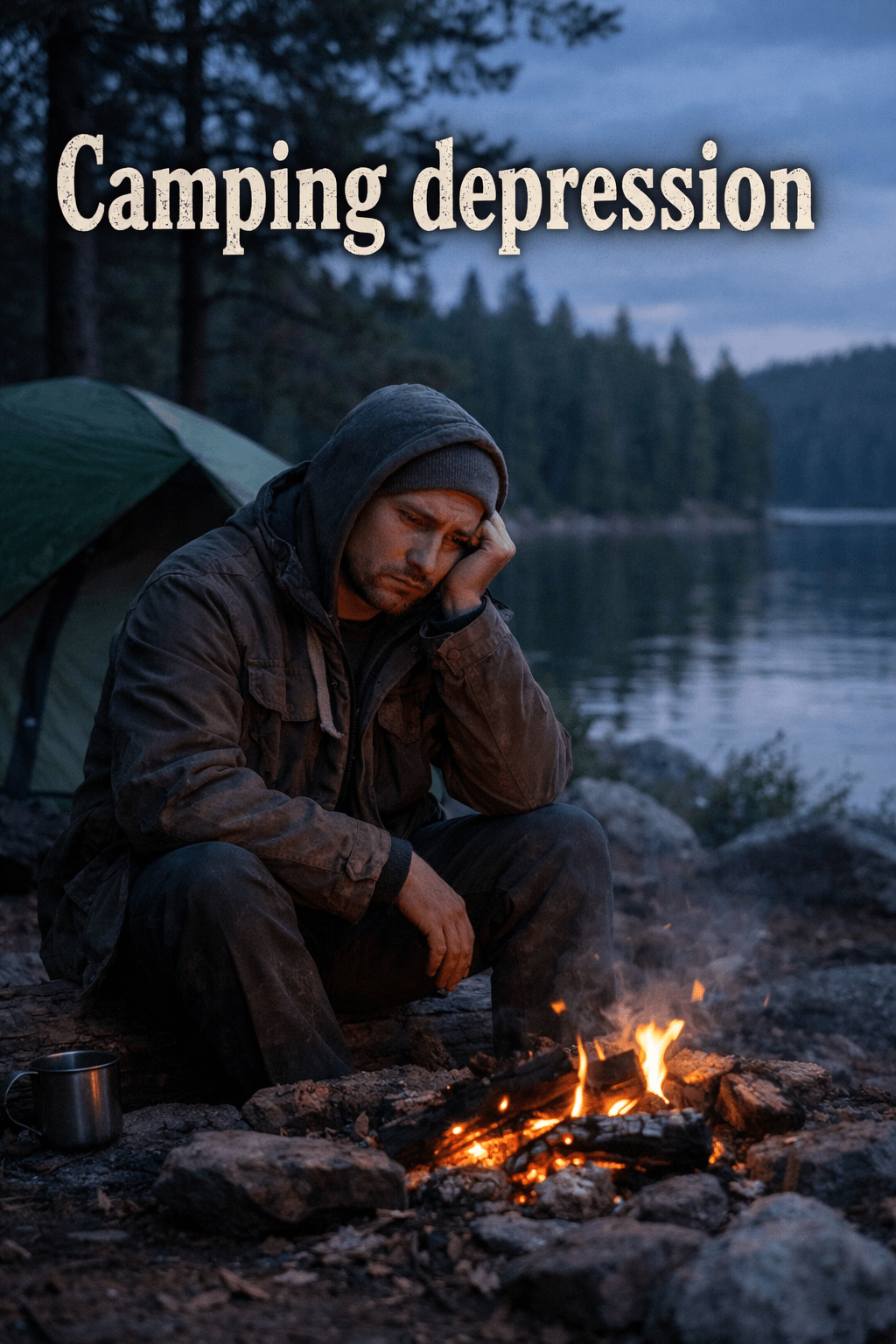
When the Outdoors Doesn’t Feel Healing
Camping is often marketed as a reset button for life. Fresh air. Crackling campfires. Star-filled skies. Total freedom.
So what happens when you finally get out there — and instead of peace, you feel heavy, irritable, lonely, or emotionally drained?
Many people quietly experience what some call “camping depression.” It’s not a clinical diagnosis, but it’s a very real emotional experience. And if you’ve felt it, you’re not alone.
Let’s break down what it is, why it happens, and how to navigate it.
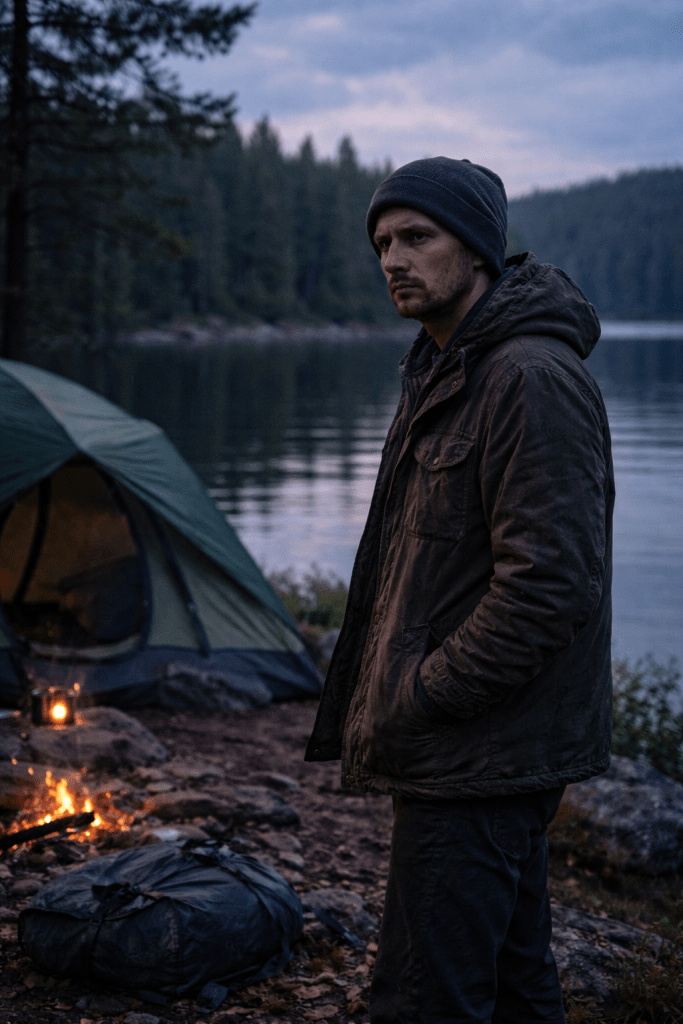
What Is “Camping Depression”?
Camping depression describes feelings of sadness, burnout, anxiety, or emotional flatness that show up during or after a camping trip.
This can feel confusing because nature is widely known to improve mental health. Studies linked to organizations like the American Psychological Association show that time in nature can reduce stress and improve mood.
But nature doesn’t magically override what’s happening inside you.
Sometimes, the quiet of the forest amplifies what daily life keeps buried.
Why It Happens
1. Silence Amplifies Thoughts
When you remove:
- Notifications
- Deadlines
- Noise
- Constant distraction
You’re left alone with your thoughts.
For some people, that’s freeing.
For others, it’s overwhelming.
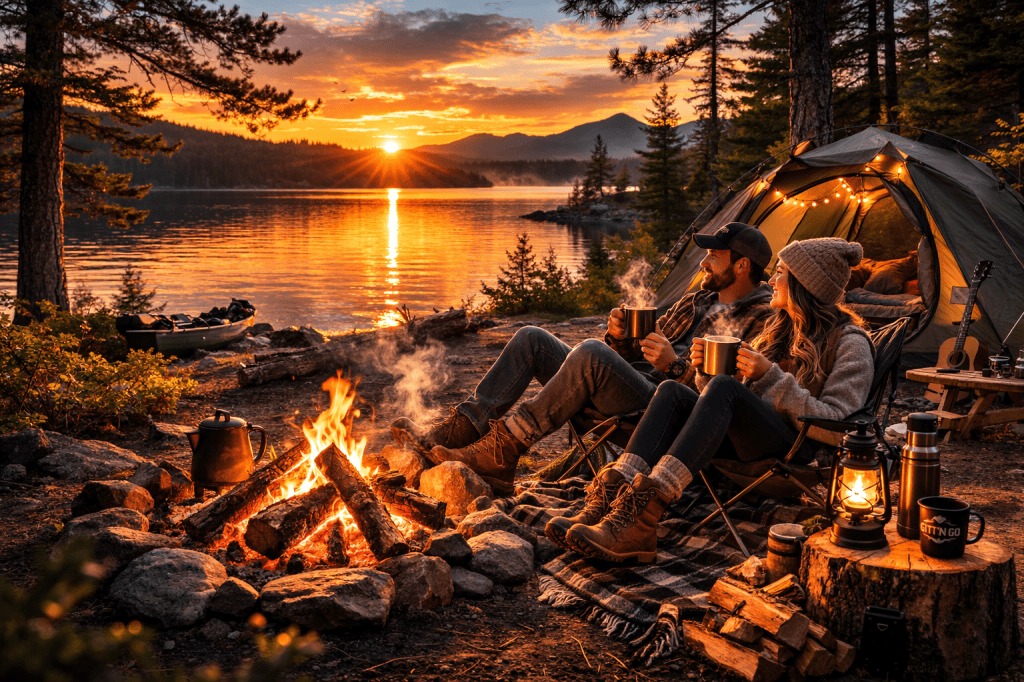
The stillness of a lake at sunset can feel peaceful — or it can feel isolating if you’re already carrying stress or unresolved emotions.
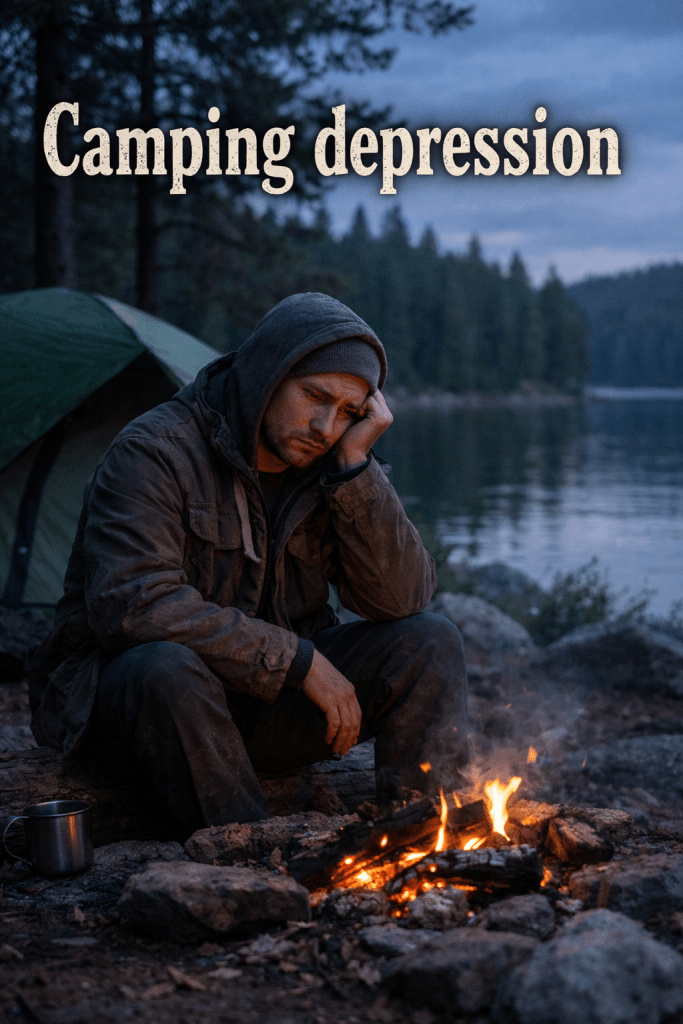
2. Physical Exhaustion
Camping can be physically demanding:
- Setting up tents
- Gathering firewood
- Managing gear
- Sleeping on uneven ground
Poor sleep + physical fatigue = emotional vulnerability.
Even mild sleep deprivation can impact mood regulation.
3. Unrealistic Expectations
Social media paints camping as:
- Perfect couples by the fire
- Happy families roasting marshmallows
- Peaceful solo adventurers journaling at sunrise
When your experience doesn’t match that highlight reel, disappointment sets in.
And disappointment can spiral into self-criticism:
“Why am I not enjoying this?”
“What’s wrong with me?”
Nothing is wrong with you.
4. Post-Trip Emotional Drop
Some people experience camping depression after returning home.
You go from:
- Open skies
- Campfire conversations
- Simple routines
Back to:
- Emails
- Bills
- Noise
- Responsibility
That emotional contrast can feel like a crash.
It’s similar to what athletes sometimes feel after major events or what people experience after holidays.
Signs You Might Be Experiencing It
- Persistent low mood during the trip
- Irritability over small inconveniences
- Feeling disconnected from others
- Lack of enjoyment in normally enjoyable moments
- Emotional heaviness after returning home
If those feelings last more than a couple of weeks or significantly interfere with daily life, it may be something deeper than a temporary slump.
The Truth About Nature and Mental Health
Nature supports healing. It doesn’t replace it.
Research from institutions like Stanford University has shown that walking in natural environments can reduce rumination (repetitive negative thinking). But that doesn’t mean a weekend trip cures burnout or depression.
Camping can:
- Lower stress hormones
- Improve sleep quality (when conditions are good)
- Increase mindfulness
But emotional health is layered.
How to Manage Camping Depression
1. Adjust Your Expectations
Instead of:
“This trip will fix me.”
Try:
“This trip is a chance to slow down.”
Release the pressure for it to be transformative.
2. Build Simple Structure
Even in the woods, routine helps.
- Morning coffee ritual
- Short daily hike
- Evening fire reflection
- Set sleep times
Structure supports emotional stability.
3. Move Your Body
Light activity boosts mood:
- Short walks
- Stretching
- Swimming
- Gathering wood
Movement regulates stress and improves clarity.
4. Bring Connection With You
If you’re solo camping:
- Journal your thoughts
- Bring a book
- Pre-download a podcast
- Schedule a short check-in call (if reception allows)
Isolation becomes healthier when it’s intentional, not accidental.
5. Don’t Ignore Bigger Patterns
If you notice:
- Ongoing burnout
- Emotional numbness
- Long-term sadness
- Loss of interest in things you used to love
Camping might simply be revealing what daily busyness was hiding.
That’s not failure — that’s awareness.
If you ever feel overwhelmed or unsafe emotionally, reach out to a trusted adult, counselor, or local support service. Talking to someone is strength, not weakness.
Turning the Experience Into Growth
Sometimes the most powerful camping trips aren’t the ones filled with joy.
They’re the ones where you:
- Realize you’re tired
- Admit you’re overwhelmed
- Recognize you need change
The quiet gives clarity.
And clarity is the first step toward improvement.
Final Thoughts
Camping depression doesn’t mean nature failed you.
It might mean:
- You’re exhausted
- You’re carrying too much
- You expected too much
- You needed stillness more than you realized
The outdoors isn’t a cure.
It’s a mirror.
And sometimes, seeing yourself clearly is uncomfortable before it becomes empowering.
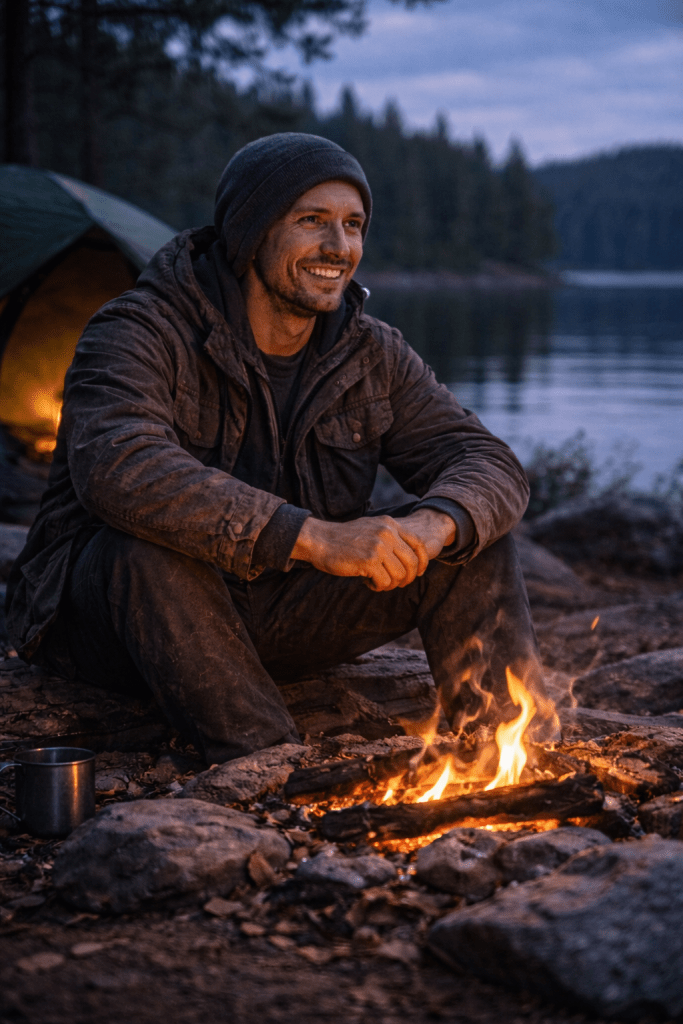
At GITT N GO, we believe better living starts outside.
Check out Our Youtube for videos of our adventures and gear reviews https://www.youtube.com/@gittngo
Helpful Gear From Amazon:
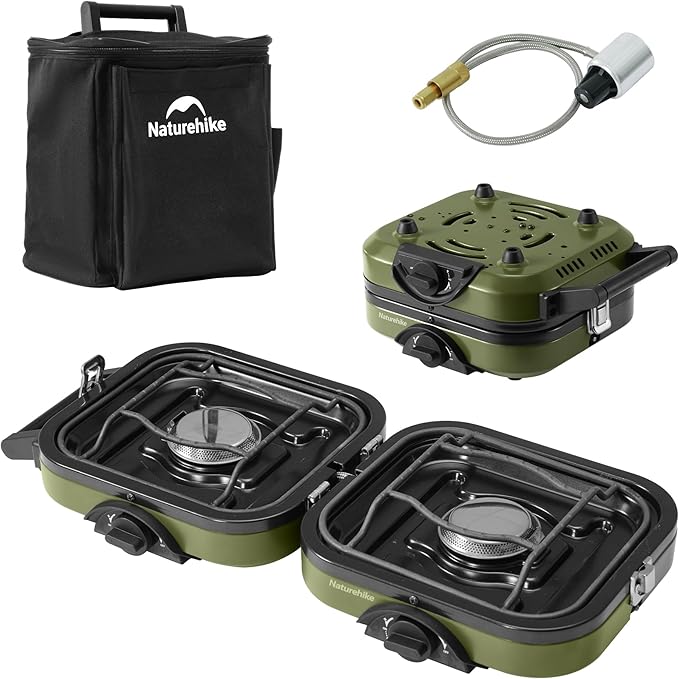
Naturehike 2 Burner Folding Camping Stove
Naturehike Folding IGT Camping Table

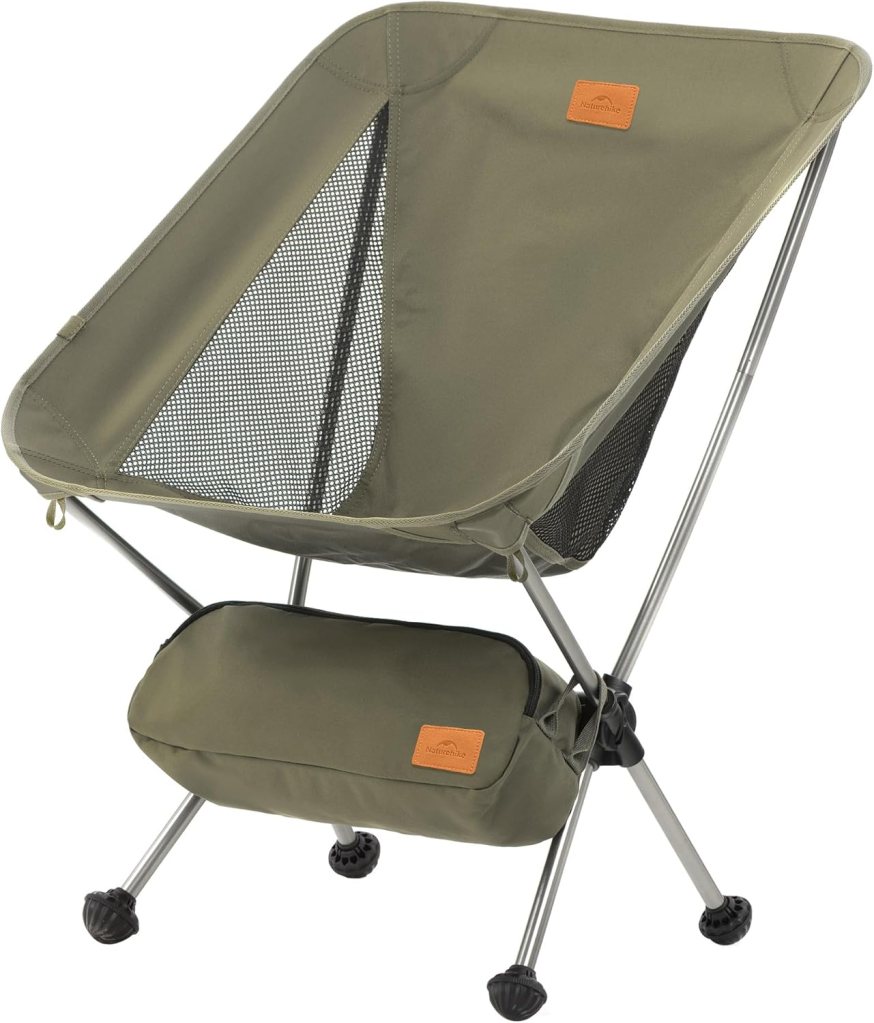
Naturehike YL08 Ultralight Camping Chair
 GITT N GO
Leave a comment