
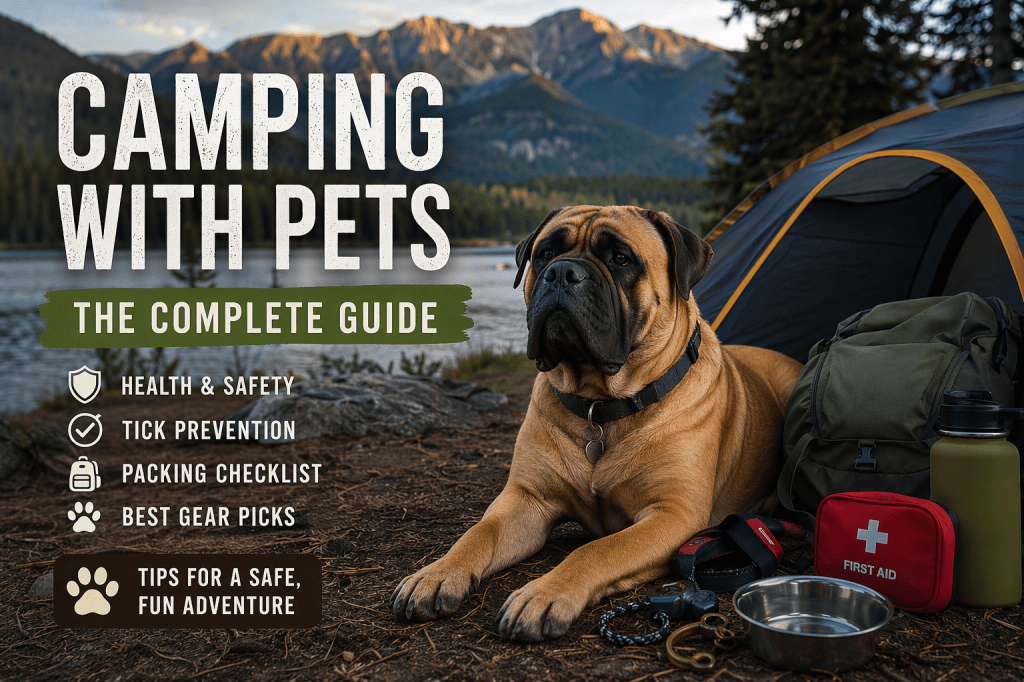
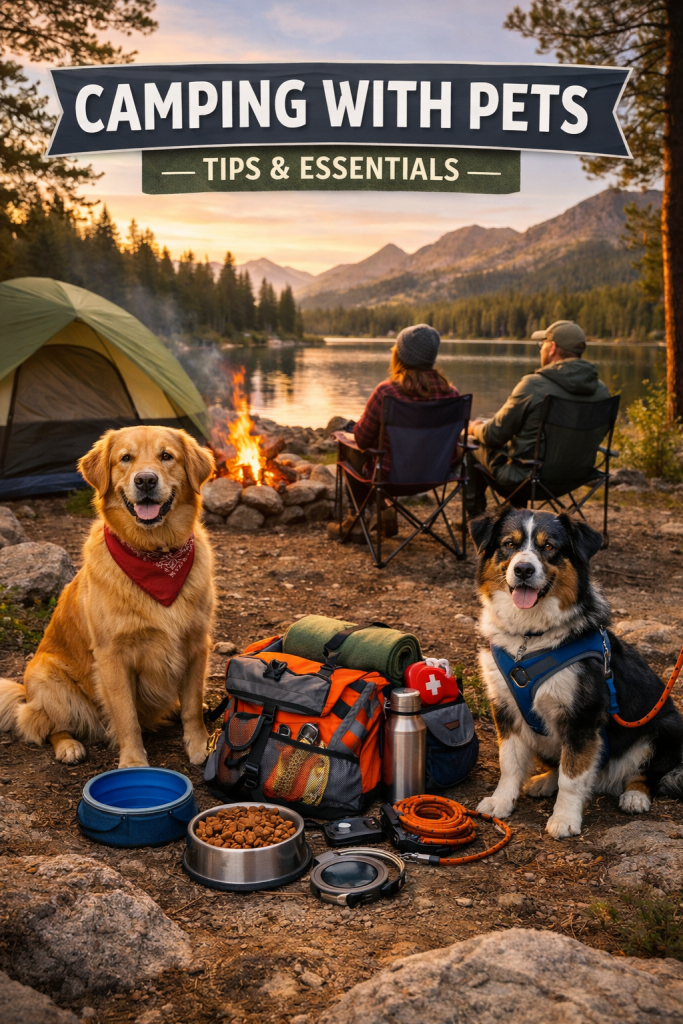
🐾 The Guide to Camping With Pets (Health Risks + How to Prevent Them)
Camping with your pet can be one of the most rewarding outdoor experiences you’ll ever have. Whether it’s a lakeside sunrise or a quiet night by the fire, bringing your dog (or even a cat) along adds a whole new level of adventure. But nature comes with risks—especially for animals who don’t understand the dangers around them.
This guide breaks down what you need to know, including real health risks and exactly how to prevent them—so your trip stays fun, not stressful.
🏕️ Why Camp With Your Pet?
- 🧠 Reduces stress and anxiety
Spending time outdoors with your pet lowers cortisol levels for both of you. - 🐕 Dogs are naturally built for the outdoors
Hiking, exploring, and camping tap into their instincts. - 💪 Boosts physical health
Pets that camp regularly get more exercise, leading to better weight and joint health. - ❤️ Strengthens your bond
Shared experiences in nature build trust and connection faster than everyday routines. - 🌲 Improves mental stimulation
New smells, terrain, and environments keep your pet engaged and happy. - 💤 Better sleep (for both of you)
Fresh air and activity help pets settle down easier at night. - 🐾 Encourages better behavior
Tired dogs = calmer dogs. Camping naturally reduces destructive behavior. - 🌎 More pet-friendly travel option
Camping is often easier than hotels when bringing pets. - 🔥 Creates unforgettable experiences
Campfire nights and trail adventures are just better with your dog beside you. - 🧭 Builds confidence (especially for anxious pets)
Exposure to new environments helps pets become more adaptable over time.
⚠️ Common Health Risks for Pets While Camping
🐜 Ticks (Biggest Risk in Most Areas)
Ticks are one of the most serious threats when camping, especially in wooded or grassy areas.
Why They’re Dangerous
Ticks can carry diseases like:
- Lyme disease
- Anaplasmosis
- Ehrlichiosis
These can cause fatigue, joint pain, fever, and long-term health issues.
🛡️ How to Prevent Ticks
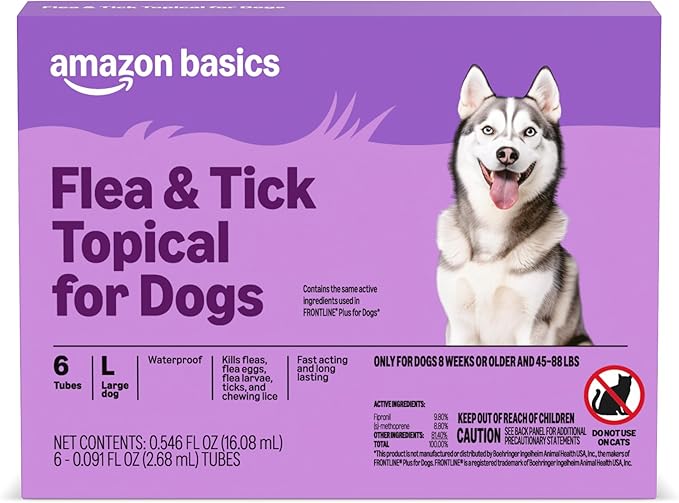
- Use a vet-approved tick preventative (topical or oral)
- Avoid tall grass and dense brush
- Keep your pet on a leash on trails
- Use a tick-repellent collar
- Do daily full-body checks
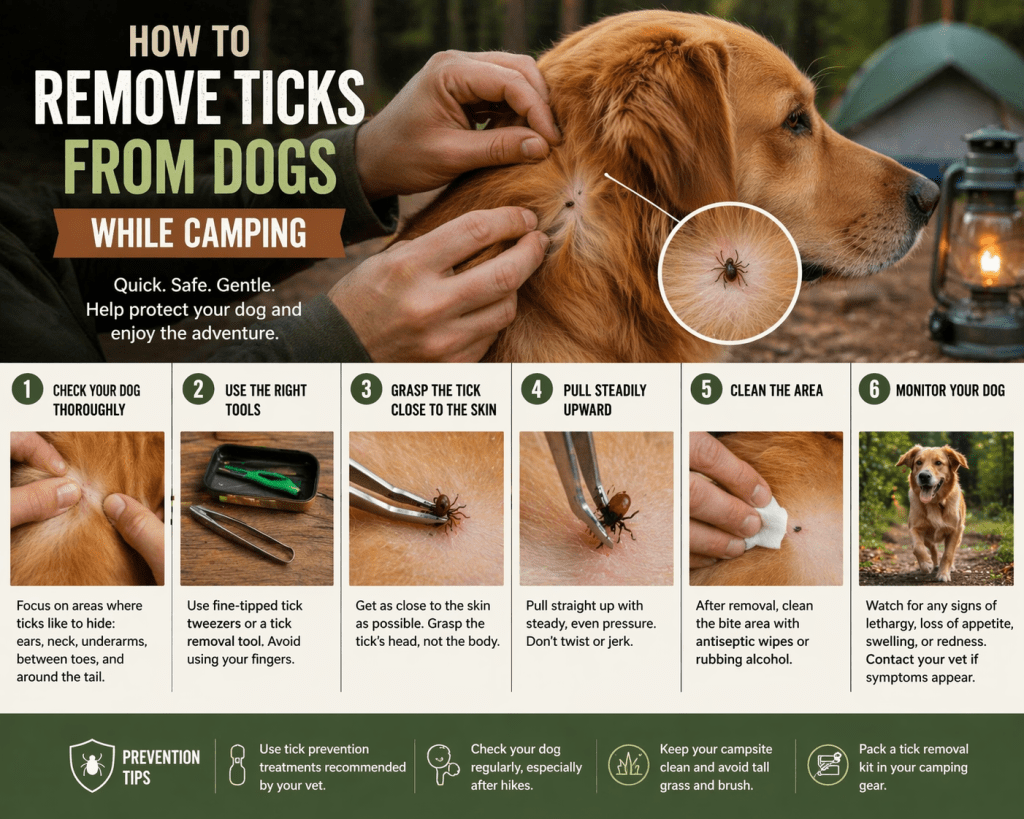
🔍 Where to Check for Ticks:
- Ears (inside + behind)
- Neck and collar area
- Armpits
- Between toes
- Under tail
Even with tick prevention ticks can still catch a ride on your petand jump on you so be sure to check yourself as well.
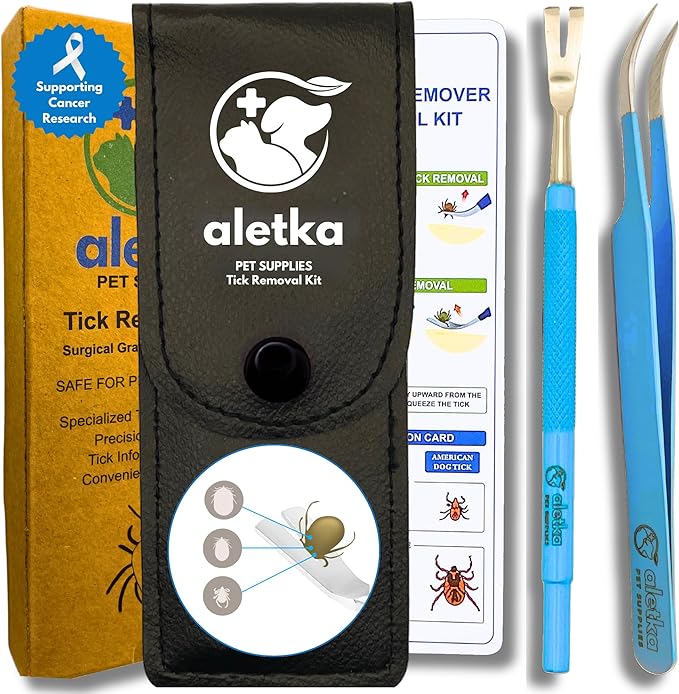
🧰 How to Remove a Tick (Step-by-Step)
- Use fine-tip tweezers
- Grab the tick as close to the skin as possible
- Pull straight out slowly (don’t twist)
- Clean the area with antiseptic
- Wash your hands
⚠️ Avoid:
- Burning the tick
- Using petroleum jelly
- Twisting (can leave parts embedded)
If your pet shows symptoms after removal, contact a vet.
🦟 Mosquitoes & Parasites
Mosquitoes can transmit heartworm, which is serious and sometimes fatal.
Prevention:
- Monthly heartworm medication
- Avoid camping near stagnant water
- Use pet-safe mosquito repellents
🌡️ Heat Exhaustion & Dehydration
Pets overheat faster than humans—especially dogs.
Signs:
- Heavy panting
- Drooling
- Weakness or vomiting
Prevention:
- Always provide fresh water
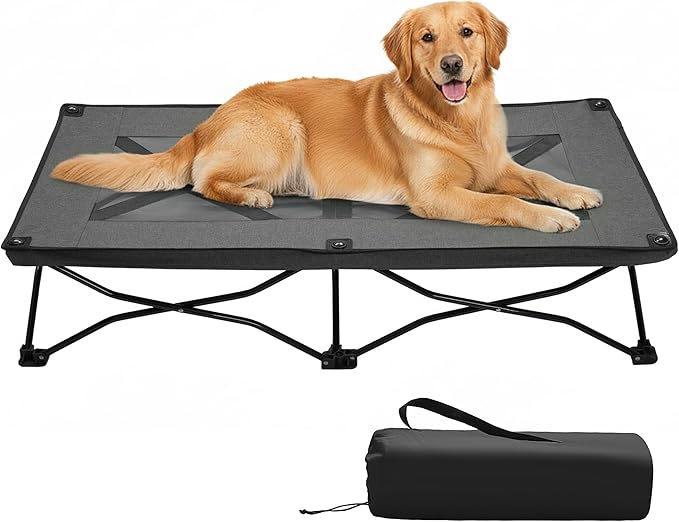
- Bring a shaded area or cooling mat
- Avoid midday activity
- Never leave pets in a tent or vehicle in heat
🐍 Wildlife Encounters
Depending on where you camp, your pet may encounter:
- Snakes
- Raccoons
- Coyotes
Prevention:
- Keep pets leashed
- Don’t let them roam at night
- Store food securely
- Keep campsite clean
🌿 Toxic Plants
Some plants can be harmful if ingested.
Common risks include:
- Poison ivy (skin irritation)
- Mushrooms (some are highly toxic)
Prevention:
- Keep pets from eating unknown plants
- Stay on established trails
- Learn basic toxic plant identification
🦴 Injuries (Cuts, Paw Damage)
Rough terrain can tear paw pads or cause injuries.
Prevention:
- Check paws daily
- Use dog booties if needed
- Avoid sharp or rocky terrain
🐕 Choose a Pet-Friendly Campsite
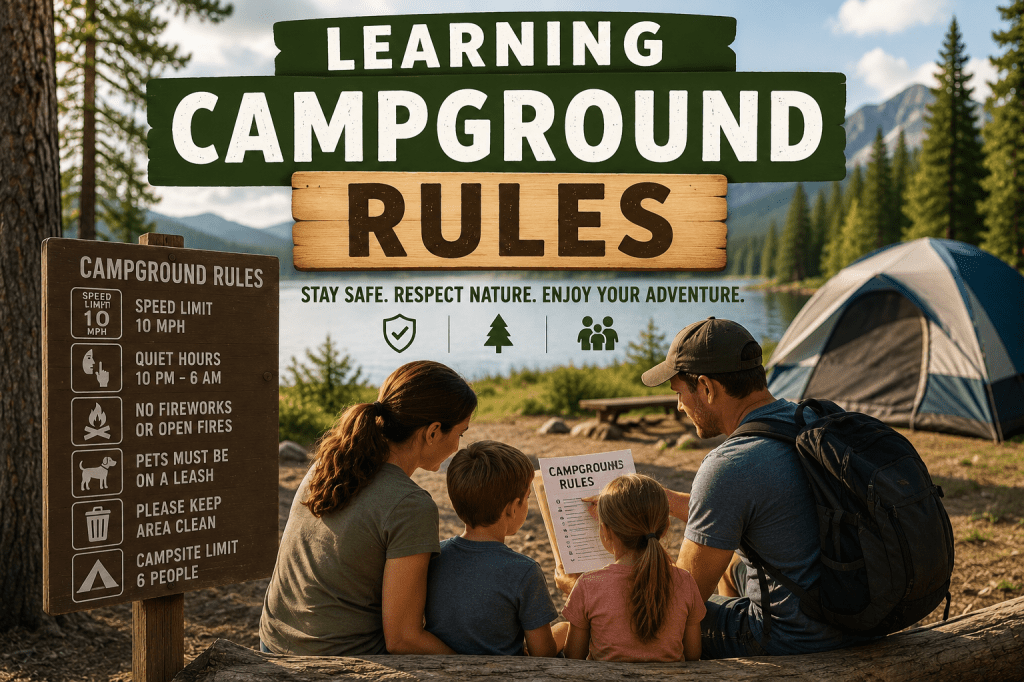
Not all campgrounds allow pets, and some have restrictions. Always check rules ahead of time and look for:
- Leash-friendly trails
- Open space for exercise
- Pet-friendly amenities
- Create a designated resting area
- Keep them tied or contained when needed
- Never leave them unattended
- Keep fire and cooking areas off-limits
Pro Tip: Crown land and backcountry sites often offer more freedom—but require better control of your pet.
🎒 Essential Gear for Camping With Pets
Here’s a simple checklist to keep your pet safe:
Must-Haves:
- Leash + harness
- Glow Collars
- Portable water bowl
- Extra food
- Pet first-aid kit
- Tick removal tool
- Food & collapsible bowls
- Waste bags
- Blanket or bed
- Favorite toy
Think of it as their “camping pack.”
Nice-to-Have:
- Cooling mat
- Pet sleeping pad or blanket
- LED collar for night visibility
🧠 Pro Tips Most Beginners Miss
- Bring something that smells like home (blanket/toy)
💧 Hydration & Feeding Gear
Always bring more water than you think you need—especially for active dogs.
🛏️ Comfort & Sleeping Setup
Why this matters:
A comfortable dog = less anxiety, better sleep, and fewer problems at camp.
🔦 Safety & Control
Game changer: Night visibility + proper control can prevent accidents instantly.
🧠 Beginner Mistakes to Avoid
- Letting pets roam freely
- Skipping tick checks
- Not bringing enough water
- Ignoring early signs of overheating
- First trip being too long
Start small. Build experience.
🌧️ Prepare for Weather Changes
Just like you, your pet can get cold, wet, or overheated.
- Bring a pet jacket for cold nights
- Provide shade during hot days
- Dry them off if it rains
🧼 Respect Nature (Leave No Trace)
Responsible camping includes your pet too.
- Pick up waste
- Keep pets from disturbing wildlife
- Stay on designated trails
This keeps nature clean—and ensures pets stay welcome.
🐍 Wildlife & Unknown Hazards
Snakes, raccoons, and even other dogs can be threats.
Prevention:
- Keep pets leashed
- Don’t allow roaming at night
- Store food securely
🚨 When to Call a Vet
Act immediately if you notice:
- Lethargy after a tick bite
- Trouble breathing
- Severe vomiting or diarrhea
- Limping or visible injury
🏁 Final Thoughts
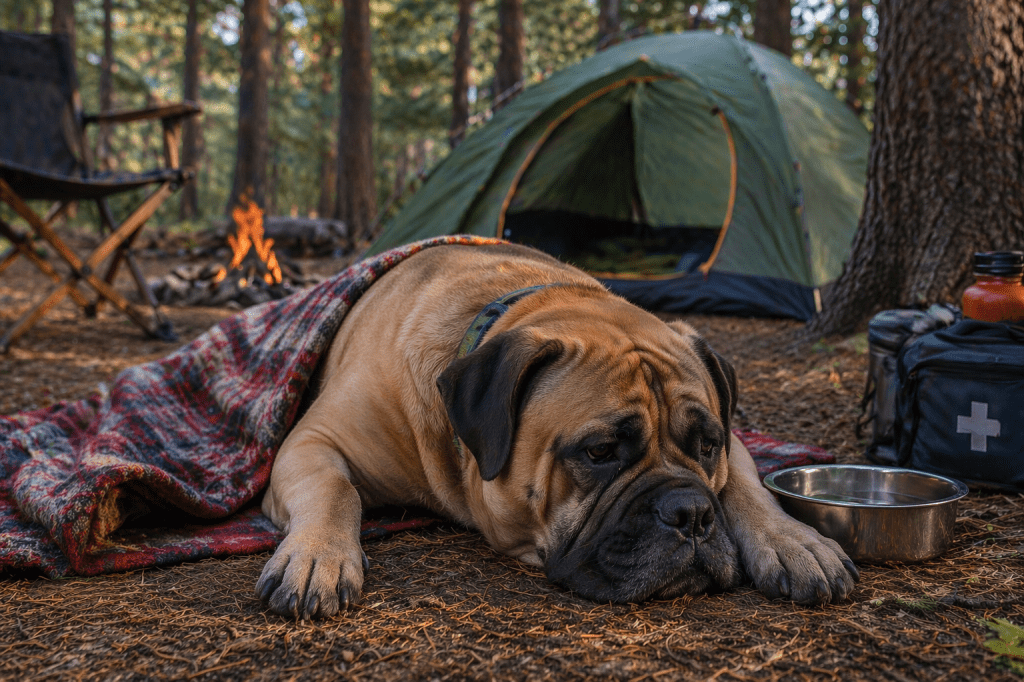
Camping with your pet isn’t complicated—but it requires preparation.
If you handle the basics:
- They stay safe
- You stay relaxed
- The trip actually becomes enjoyable
Your goal isn’t just to bring your pet…
👉 It’s to camp confidently with them.
📌 Bonus: Quick Packing Checklist
- ✔️ Food + extra water
- ✔️ Leash + harness
- ✔️ Tick prevention + removal tool
- ✔️ First aid kit
- ✔️ Sleeping setup
- ✔️ Waste bags
- And Of course some of their favorite toys !
🎒 Amazon Gear You Actually Need (Affiliate Picks)




 GITT N GO
Leave a comment