
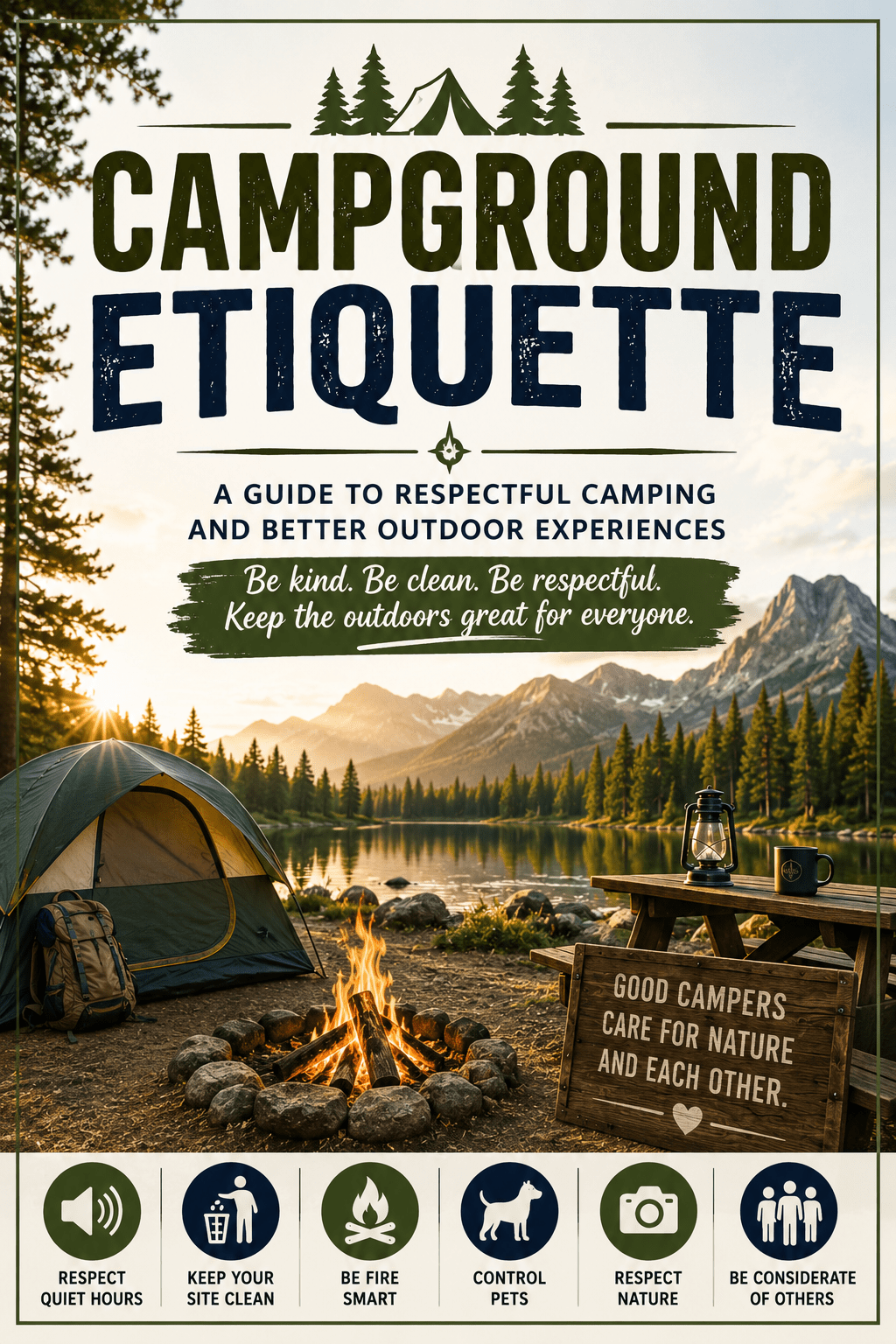
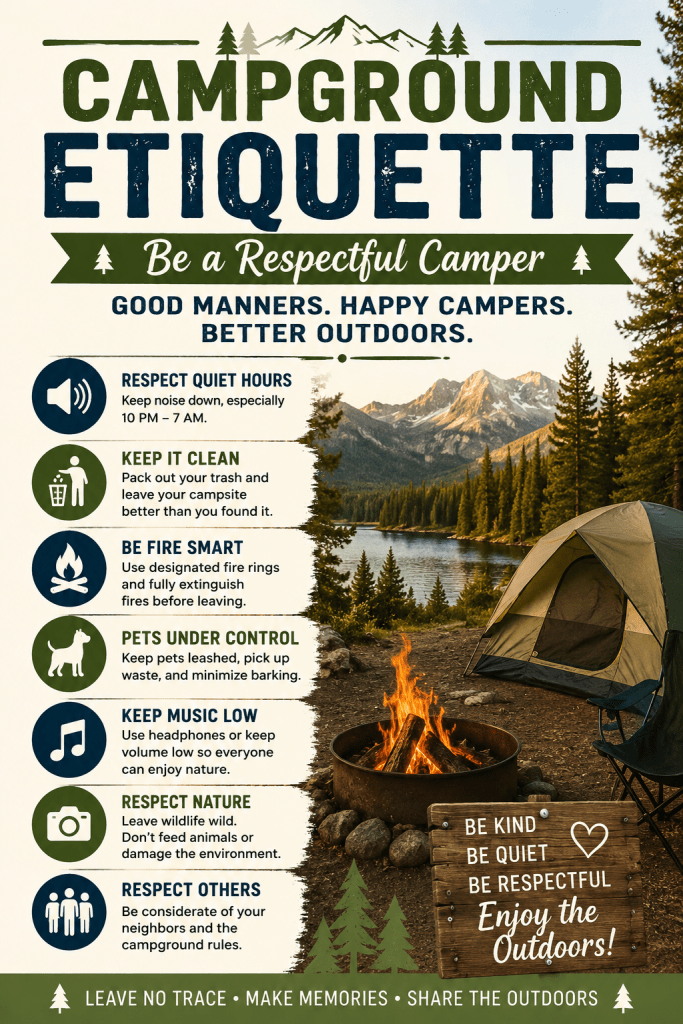
Camping is one of the best ways to relax, reconnect with nature, and spend quality time with friends and family. But sharing campgrounds with other people also means sharing space, trails, bathrooms, lakes, and peaceful outdoor experiences. Good campground etiquette helps everyone enjoy their trip safely and comfortably.
Whether you are camping in a tent, truck camper, RV, or pop-up camper, understanding proper campground manners can make you a better camper and help preserve campgrounds for future generations.
Why Campground Etiquette Matters
Campgrounds are shared outdoor communities. One loud campsite, messy area, or careless camper can negatively affect dozens of people around them. Practicing good etiquette helps:
- Keep campgrounds clean
- Protect wildlife and nature
- Reduce conflicts between campers
- Create a welcoming camping culture
- Improve safety for everyone
- Preserve the peaceful outdoor atmosphere people come to enjoy
Many campground problems can be avoided simply by being considerate of others.
Respect Quiet Hours
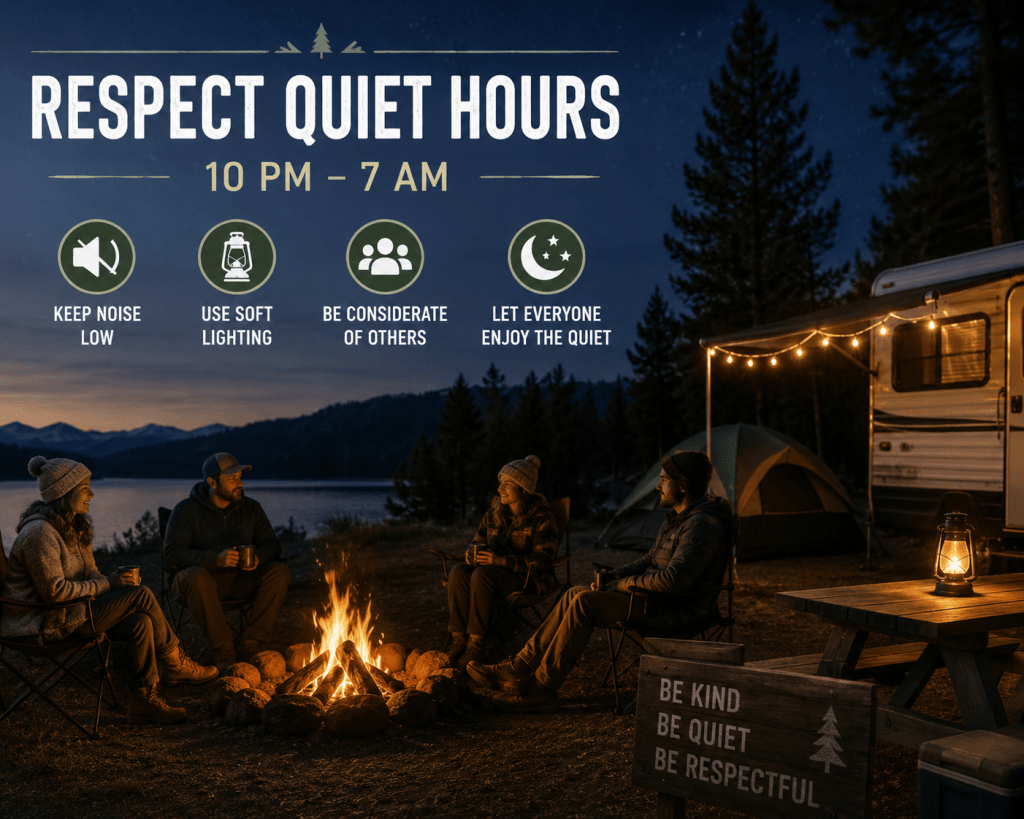
One of the most important campground rules is respecting quiet hours.
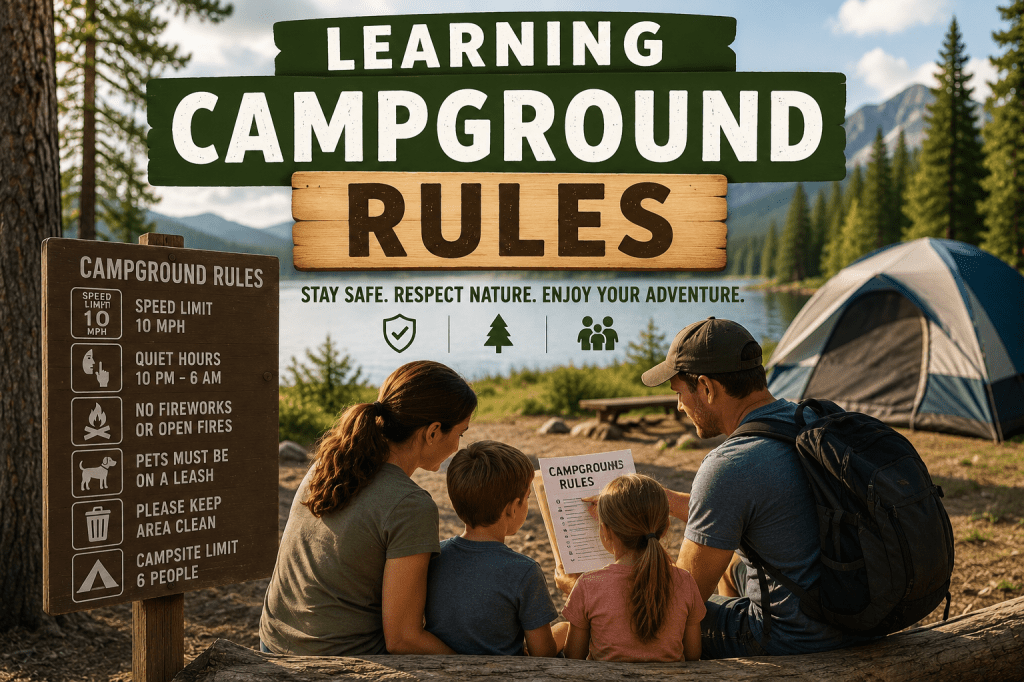
Most campgrounds have designated quiet hours, often between 10 PM and 7 AM. During these times:
- Keep voices low
- Turn down music
- Avoid running generators
- Limit vehicle movement
- Keep barking dogs under control
Sound travels much farther outdoors than many people realize. A loud conversation or Bluetooth speaker can echo through an entire campground late at night.
If you want to stay up around the fire, that is perfectly fine — just keep noise levels respectful.
Keep Music and Speakers Under Control
Not everyone wants to hear your playlist while camping.
A good rule:
If your music can be clearly heard from neighboring campsites, it is probably too loud.
Many campers visit campgrounds specifically to enjoy:
- Birds chirping
- Wind in the trees
- Crackling campfires
- Quiet mornings by the lake
Using headphones or keeping music at a low background level is the best approach.
Respect Campsite Boundaries
Every campsite is someone else’s temporary home.
Avoid:
- Walking through occupied campsites
- Letting children cut through sites
- Allowing pets to roam into neighboring camps
- Parking partially in another site’s space
Use campground roads and designated walking paths instead of shortcuts through campsites.
Even if nobody says anything, walking through someone’s campsite can feel invasive and disrespectful.
Control Your Campfire
Campfires are one of the best parts of camping, but they also require responsibility.
Always:
- Use designated fire pits
- Keep fires manageable
- Never leave fires unattended
- Fully extinguish fires before bed or leaving camp
Avoid:
- Burning garbage or plastics
- Gathering firewood where prohibited
- Creating oversized bonfires
- Tossing cans or food into the fire
Before leaving, drown the fire completely with water and stir the ashes until cool.
Keep Your Campsite Clean
A messy campsite attracts wildlife and ruins the campground experience for others.
Good campsite habits include:
- Storing food properly
- Picking up trash immediately
- Securing coolers overnight
- Keeping cooking areas tidy
- Cleaning dishes properly
Before leaving:
- Inspect the site carefully
- Pick up micro-trash
- Remove bottle caps, zip ties, and food scraps
- Leave the site cleaner than you found it
This follows the important camping principle of “Leave No Trace.”
Be Considerate With Generators
Generators can be extremely disruptive in campgrounds.
If you use one:
- Follow campground generator hours
- Avoid early morning or late-night use
- Position it away from neighboring campsites when possible
- Maintain it properly to reduce noise
Many campers choose quiet inverter generators because they are less disruptive.
If you rely on generators for medical or essential equipment, most campers will understand — respectful use is what matters.
Watch Your Campground Speed
Campgrounds are full of:
- Children
- Cyclists
- Dogs
- Walkers
- Wildlife
Drive slowly and cautiously at all times.
Dusty roads and speeding vehicles can ruin the peaceful environment and create dangerous situations.
Most campgrounds have low speed limits for good reason.
Practice Good Pet Etiquette
Camping with pets can be amazing, but responsible pet ownership is essential.
Always:
- Keep pets leashed where required
- Pick up pet waste immediately
- Prevent excessive barking
- Respect pet-free areas
- Never leave pets unattended for long periods
Not everyone is comfortable around dogs, and some campers may have pets that react poorly to unfamiliar animals.
A well-behaved camping dog makes campground life enjoyable for everyone.
Respect Nature and Wildlife
Wild animals should remain wild.
Never:
- Feed wildlife
- Leave food unattended
- Approach animals for photos
- Store garbage improperly
Feeding wildlife can:
- Make animals aggressive
- Harm their health
- Create dangerous situations
- Lead to animals being relocated or destroyed
Also avoid:
- Damaging trees
- Cutting live branches
- Moving rocks unnecessarily
- Creating unauthorized trails
The goal is to enjoy nature without damaging it.
Be Courteous at Shared Facilities
Campgrounds often share:
- Bathrooms
- Showers
- Dishwashing stations
- Water taps
- Dump stations
Good etiquette includes:
- Cleaning up after yourself
- Limiting shower time during busy periods
- Not blocking access areas
- Leaving facilities in good condition
At dump stations:
- Be prepared before pulling in
- Move efficiently
- Let others use the area once finished
Nobody enjoys waiting behind someone who is unprepared.
Use Outdoor Lighting Responsibly
Bright LED lights can overwhelm neighboring campsites at night.
Try to:
- Use softer lighting
- Turn off unnecessary lights before bed
- Avoid spotlighting neighboring campsites
- Keep vehicle headlights from shining into tents
Many campers enjoy dark skies and stargazing, especially in remote campgrounds.
Respect Early Risers and Late Arrivals
Some campers wake up before sunrise for:
- Fishing
- Hiking
- Photography
- Hunting
- Quiet coffee by the fire
Others may arrive late after long drives.
Everyone should try to minimize noise during sensitive hours.
If arriving late:
- Use flashlights instead of bright headlights
- Set up quietly
- Avoid slamming doors or yelling
If waking early:
- Keep conversations low
- Avoid loud cooking setups
- Respect sleeping neighbors
Teach Children Campground Respect
Camping is a great opportunity to teach kids outdoor responsibility.
Teach children to:
- Respect neighboring campsites
- Keep noise levels reasonable
- Stay safe around fires
- Clean up trash
- Respect wildlife and nature
Most campers enjoy seeing kids having fun outdoors — as long as they are being respectful and supervised.
Don’t Leave Food Out Overnight
Leaving food outside is one of the fastest ways to attract:
- Raccoons
- Bears
- Skunks
- Squirrels
- Coyotes
Before bed:
- Store food securely
- Clean cooking surfaces
- Put away garbage
- Empty coolers properly if needed
Wildlife encounters caused by careless campers can affect the entire campground.
Respect Different Camping Styles
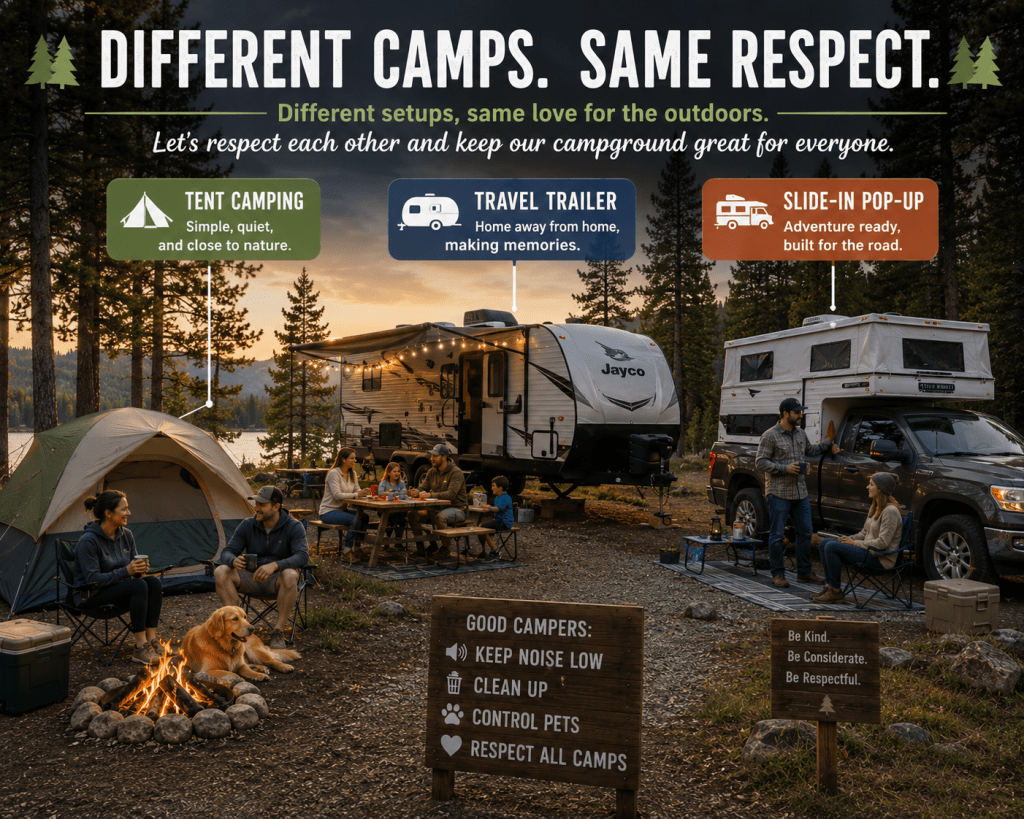
Not everyone camps the same way.
Some people:
- Want quiet relaxation
- Enjoy social campground experiences
- Travel with large families
- Camp in luxury RVs
- Prefer minimalist tent camping
Respecting different camping styles helps everyone coexist peacefully.
As long as others are following campground rules and being respectful, there is room for many different camping experiences.
Follow Campground Rules
Every campground has its own rules regarding:
- Pets
- Fires
- Alcohol
- Generators
- Quiet hours
- Parking
- Water use
Read posted rules when you arrive and follow them carefully.
Campground staff work hard to maintain safe and enjoyable spaces for everyone.
Leave No Trace Principles
The foundation of campground etiquette is the “Leave No Trace” mindset.
The seven Leave No Trace principles are:
- Plan ahead and prepare
- Travel and camp on durable surfaces
- Dispose of waste properly
- Leave what you find
- Minimize campfire impacts
- Respect wildlife
- Be considerate of other visitors
Following these principles helps preserve the outdoors for future campers.
Final Thoughts
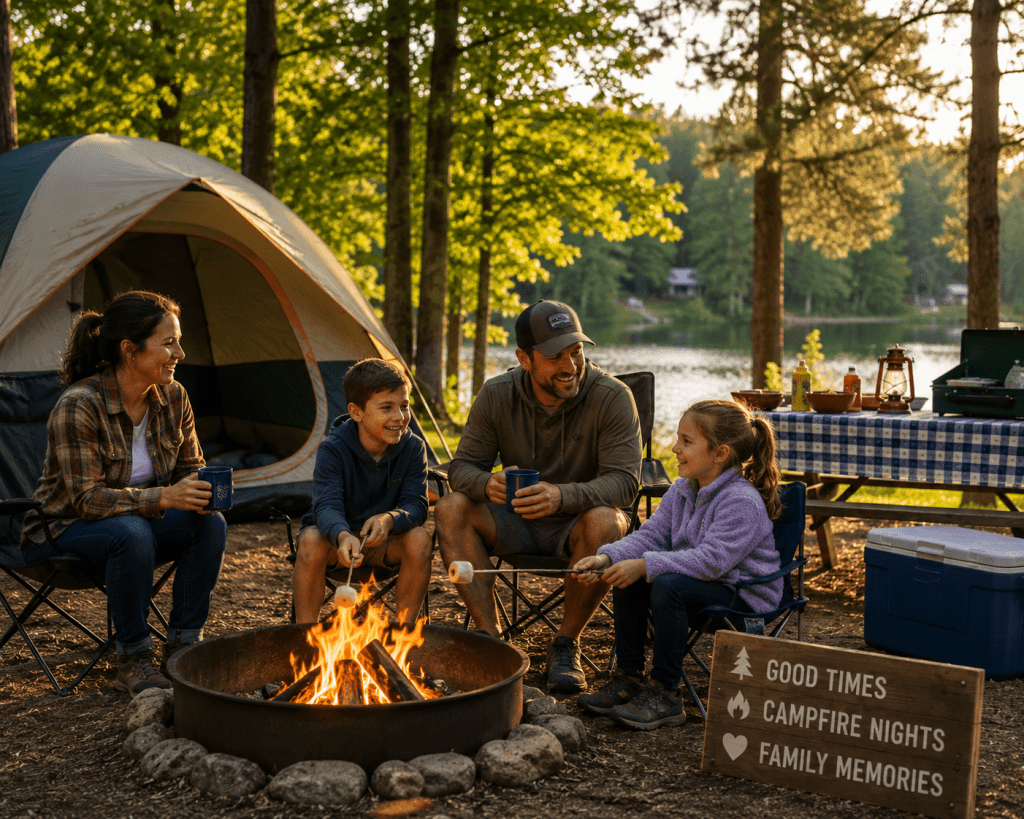
Great campers are not defined by expensive gear or fancy setups. They are defined by how they treat:
- Other campers
- Nature
- Shared spaces
- Wildlife
- Campground staff
Good campground etiquette creates better camping experiences for everyone. A little consideration goes a long way in the outdoors.
The next time you head out camping, remember:
Leave your campsite cleaner than you found it, respect the people around you, and enjoy the outdoors responsibly.
That is what camping culture is all about.
Leave a comment and let me know what else should be considered when applying camping etiquette.
Links :
Check out our youtube channel – https://www.youtube.com/@gittngo
Our Amazon Store front for gear we use. – https://www.amazon.com/shop/gittngo
 GITT N GO
Leave a comment