
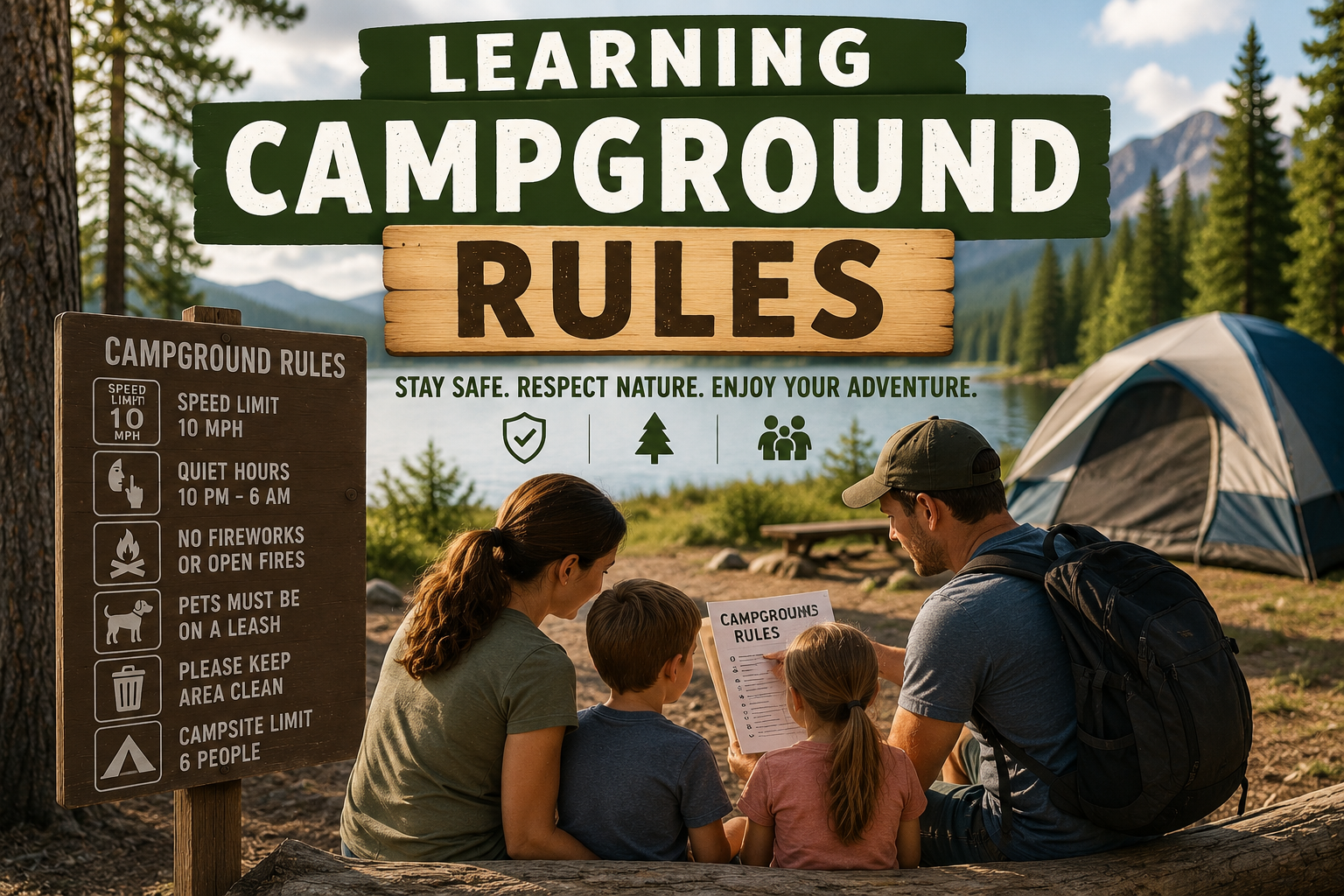

Camping is one of the best ways to disconnect from everyday stress and reconnect with nature. Whether you’re pitching a tent for the first time, pulling a travel trailer into a campground, or heading deep into the backcountry, understanding campground and park rules is one of the most important things you can do before your trip.
Unfortunately, many campers overlook the rules, assuming they’re just suggestions or unnecessary restrictions. In reality, campground and park regulations exist to protect visitors, preserve natural environments, and ensure everyone can enjoy their outdoor experience.
Let’s explore why taking the time to learn campground and park rules can make you a better camper and help create a positive experience for everyone.
Rules Keep Everyone Safe

Safety is the number one reason campground and park rules exist.
Many regulations are designed to prevent accidents and emergencies. Rules regarding campfires, food storage, wildlife interactions, and vehicle operation can significantly reduce risks for both visitors and park staff.
For example:
- Fire bans help prevent wildfires during dry conditions.
- Speed limits protect pedestrians, cyclists, and children.
- Wildlife feeding restrictions help prevent dangerous animal encounters.
- Quiet hours ensure campers can get proper rest and remain alert during outdoor activities.
Ignoring these rules may seem harmless at the moment, but the consequences can be severe for both individuals and entire communities.
Protecting Nature for Future Generations
Campgrounds and parks are often located in some of the most beautiful natural areas available to the public. These spaces require ongoing protection to remain healthy and accessible.
Rules concerning:
- Garbage disposal
- Wastewater dumping
- Trail usage
- Vegetation protection
- Wildlife conservation
are designed to minimize human impact on fragile ecosystems.
When visitors stay on designated trails, properly dispose of waste, and respect natural habitats, they help preserve these spaces for future campers.
The “Leave No Trace” principles are an excellent example of how responsible behavior can protect the outdoors while still allowing people to enjoy it.
Respecting Other Campers

Every camper has a different idea of the perfect camping experience.
Some people enjoy socializing around the campfire. Others seek peace, quiet, and solitude. Campground rules help balance these different expectations.
Common regulations regarding:
- Quiet hours
- Generator usage
- Pet control
- Site boundaries
- Visitor limits
exist to ensure that one camper’s activities don’t negatively impact another person’s experience.
Being aware of and following these rules demonstrates respect for fellow campers and helps maintain a positive campground atmosphere.
Avoiding Fines and Penalties

Many campers are surprised to learn that park rules can carry significant penalties.
Depending on the location, violations may result in:
- Warnings
- Fines
- Eviction from the campground
- Suspension of camping privileges
- Legal charges for serious offenses
Taking a few minutes to review campground policies before your trip can help you avoid unnecessary costs and frustration.
Understanding Different Parks Have Different Rules
One common mistake campers make is assuming that all campgrounds operate the same way.
In reality, rules can vary dramatically between:
- Provincial parks
- National parks
- Conservation areas
- Private campgrounds
- Crown land camping areas
For example, one campground may allow generators during specific hours while another may prohibit them entirely. Some parks permit pets on trails, while others restrict them.
Researching your destination ahead of time ensures you arrive prepared and avoid unexpected surprises.
Better Wildlife Encounters

Many campers look forward to seeing wildlife during their adventures. However, improper behavior can quickly create dangerous situations.
Rules about food storage, garbage disposal, and wildlife interaction help protect both people and animals.
Animals that become accustomed to human food often lose their natural behaviors and may become aggressive. In some cases, problem wildlife must be relocated or euthanized.
By following park regulations, campers play a direct role in protecting local wildlife populations.
Being a Good Ambassador for the Camping Community
The camping community is built on mutual respect and stewardship.
When campers follow rules and demonstrate responsible outdoor ethics, they create a positive image for everyone who enjoys the outdoors.
This helps support:
- Continued access to public lands
- Expansion of camping opportunities
- Better relationships with local communities
- Preservation of natural spaces
Every responsible camper contributes to the future of outdoor recreation.
Tips for Learning Campground Rules Before You Arrive
Before your next camping trip, take a few simple steps:
Visit the Park Website
Most campgrounds publish their regulations online.
Read Reservation Confirmations
Important rules are often included in booking emails.
Check Seasonal Notices
Fire bans, wildlife advisories, and temporary closures can change frequently.
Talk to Park Staff
Don’t hesitate to ask questions during check-in.
Review Maps and Information Boards
Many parks post reminders at entrances, trailheads, and comfort stations.
Final Thoughts
Campground and park rules aren’t designed to limit your fun—they’re there to enhance your experience and protect the places we all love to visit.
Taking the time to educate yourself before your trip can help keep you safe, preserve the environment, respect fellow campers, and ensure that future generations can enjoy the same incredible outdoor experiences.
The next time you’re planning an adventure, spend a few minutes reviewing the campground rules before you leave home. It’s one of the easiest ways to become a more responsible camper and make every camping trip more enjoyable.
After all, great camping isn’t just about where you go—it’s about how you treat the places and people around you once you get there.
Check out our Amazon store for gear we use to make our outdoor adventures more enjoyable.


Leave a Reply